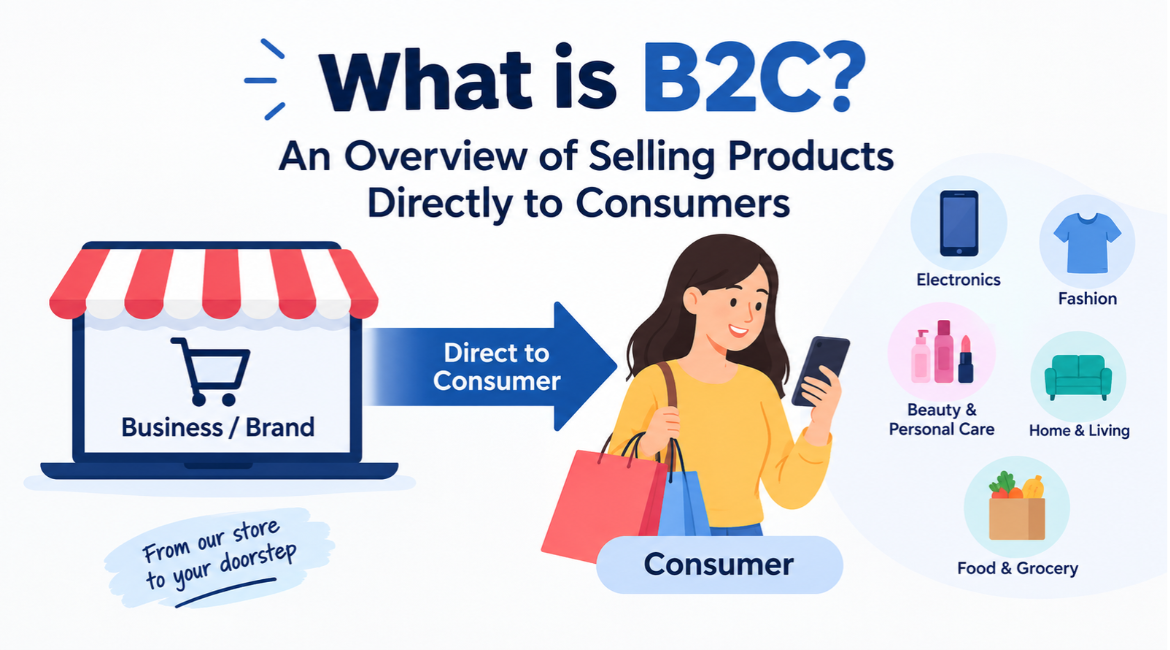
Do you remember your recent shopping history? Most likely, you ordered some food from an application, bought a pair of shoes via the internet, or subscribed to listen to your favorite music. All those transactions are B2C transactions. Despite this, there are numerous beginners in business and students who wonder what is B2C. In case you are one of those people, then this article will definitely be helpful to you.
Here we will explain what is B2C in clear language. We will discuss the B2C market, its difference from D2C, and useful marketing techniques that attract customers. In addition, we will tell you how Websyntra can promote your brand online.
What is B2C?
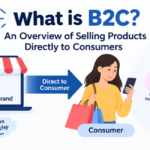
As a rule, B2C is understood as Business to Consumer. This means that the enterprise sells its products directly to the consumers for their own purposes. There are no intermediary companies that place orders. It is simply a seller and a buyer.
For example, the local store that sells clothes, the applications for delivery of food, the courses on the Internet, the beauty salon, and the network operator are all B2C businesses. So, when someone asks you what is B2C in business, here is the most short answer for him: any enterprise that operates with individual consumers, not companies.
How Does a B2C Business Work?
It is not a hard concept, but its implementation requires some effort. Most of the B2C businesses have the following path:
- Attract: Potential clients learn about your brand by visiting search engines, social media, advertisements, or recommendations from their friends;
- Persuade: Your website, client reviews, and offers convince them and eliminate doubts;
- Sell: The client makes a purchase in minutes or days, not months;
- Support and retain: Good quality service, convenient conditions for returning products and loyalty programs make clients come back.
As you see, buyers of B2C businesses are the people themselves, and thus emotions matter in their decision making process. Factors such as price, convenient conditions, image of the brand and even product pictures become crucial in the selling process.
B2B Marketing Full Form and What It Involves
In this category, all companies that sell their goods/services to individual customers are included – starting from small bakeries and ending with large e-commerce companies. The development of B2C industry in India was facilitated by lower cost of mobile devices, affordable Internet data tariffs and payment via UPI.
Several features should be highlighted when describing the B2C market:
- Large audience base
- Low pricing compared to corporate deals
- Rapid decision-making process
- High level of competition because customers compare several offers within seconds
- Strong impact of social proofs and trends
To win over in the B2C market, you should not only have an excellent product but also be visible enough and offer a convenient buying experience to consumers.
Common Types of B2C Business Models
In general, there are different types of B2C business models. Let us describe the most popular ones.
- Retail and e-commerce
- Subscription services
- Service-based business
- Freemium and ad-supported platform
- Direct brand selling (in details in the D2C section)
What Is B2C Marketing?
After you get to know what is B2C, the following question comes up – how to market your product or service in the B2C market? Thus, B2C marketing refers to a collection of marketing tactics a company uses to attract, engage and persuade individual customers. Instead of long negotiations and contracts, B2C marketing focuses on emotions, ease and quickness.
Here are the most effective marketing approaches of today:
- Search engine optimization (SEO). In fact, most purchases begin with a search. If you manage to rank highly for some keywords, you can catch the eyes of consumers ready to purchase. Nowadays, people also turn to AI systems for advice about products to buy. That is why it is reasonable to pay attention to generative engine optimization along with classic SEO techniques to boost your chances to be mentioned in AI-generated answers.
- Social media marketing. Using Instagram, Facebook or YouTube, you can demonstrate your product, tell your story and communicate with consumers.
- Email and WhatsApp marketing. Reminders, abandoned cart messages and offers can be a simple solution to attract buyers.
- Influencer marketing. Consumers always rely on real-life examples and recommendations. So, a powerful influencer can help you reach many potential clients.
- Paid ads. Google and Meta ads will provide you with rapid traffic while organic efforts grow.
- Content marketing. Articles, videos and guides help to provide answers to potential clients and gain their trust in advance.
What is the difference between B2C vs B2B?
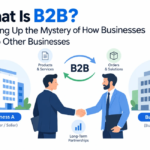
In addition to asking what is B2C, some also wonder what is B2B. The latter term denotes businesses selling to other businesses, such as a software manufacturer selling its billing system to a retailer. The two approaches seem rather distinct:
- Audience: B2C sells to consumers; B2B sells to companies
- Decision Making: In B2C, only one person has to make a decision, while in B2B, there are often several persons.
- Sales cycle: B2C happens quickly; B2B sales cycles can take days, weeks, or even months.
- Tone of marketing: B2C marketing is emotional and straightforward; B2B marketing is thorough and logical.
D2C Meaning: What Does It Stand For?
D2C is an abbreviation that stands for Direct to Consumer. So the D2C meaning is obvious – brands manufacture their products and sell directly to consumers via the website or an app without any intermediaries, such as retailers.
When speaking about the D2C meaning from the business point of view, the key thing is the control of the price, packaging, customer data, customer experience, etc. Skincare brands, clothing brands, and even food brands use this approach.
D2C vs B2C: Which is better?
It is one of the most popular questions of founders. And here is the answer that can be surprising. D2C is a kind of B2C. All D2C brands are B2C businesses; however, not all B2C businesses are D2C. A local store that sells somebody else’s products is B2C but not D2C.
And thus, when comparing D2C vs B2C and choosing which one is better, the question is in the channel of sales:
- Choose D2C when you manufacture products yourself, want to control the brand entirely and get more profits from each sale.
- Choose traditional B2C when you need to attract consumers via various marketplaces, retailers, and other channels.
Successful businesses often do both: they have their website and sell their products in marketplaces. Start with what works for you financially and then gradually increase the sales channels.
Benefits of the B2C Model
Once you understand what is B2C, the benefits are easy to see:
- A large customer base and plenty of room to scale
- Quick sales and faster cash flow
- Easy to test offers and see results
- Direct feedback from real users
- Strong brand building through social media
Common Challenges in B2C
- Tough competition and constant price comparison
- Low loyalty if the customer experience is poor
- High advertising costs
- A steady need for fresh content and offers
- Customer support demands
Practical Steps for B2C Success
Knowledge of B2C definition is just the beginning. These are the steps to make the best out of your new knowledge:
- Learn your customers. Know their age, behavior, challenges and platforms used.
- Build a fast mobile-friendly website. The vast majority of people browse using mobile devices.
- Make your products’ pages credible. Make sure they have good pictures, informative descriptions and reviews.
- Facilitate the buying process by offering UPI, cards, wallets and COD when necessary.
- Be active in your audience’s environment. Post on a regular basis and answer comments promptly.
- Measure the results. Track the traffic, conversions and loyalty, then improve further.
How Websyntra Can Help Your B2C Business to Scale
Knowledge of the concept is important but execution is what will help to win or fail. This is where Websyntra can be of assistance. Websyntra is a digital marketing and web development company which helps brands to be seen online, attract the right audience and turn visitors into customers. If you are still thinking about what is B2C and how it can help your brand, Websyntra team will help to translate your ideas into reality.
Here is how Websyntra can assist you:
- Website Development. Fast, user-friendly websites and online shops designed to increase conversion rate.
- SEO Services. Improved ranking in search engines to let people find you.
- Social Media Marketing. Engaging content and advertising campaigns to build your community.
- Performance Marketing. Targeted and profitable ad campaigns.
- Content and Design. Quality blogs, creatives and branding.
If you plan to start a direct-to-consumer business or scale your online store, Websyntra can develop a strategy that will suit your goals and budget. Visit websyntra to learn more.
Conclusion
Thus, B2C is the business model that presupposes direct sales from companies to individuals, and it makes up the base of many goods that consumers purchase. Now that you have found out what is B2C, you will know that the B2C market is extremely competitive and profitable. You need to build a proper business model and B2C marketing strategies, to decide if the D2C or B2C approach works better for you, and put a customer in the focus. With a good strategy and a competent digital marketing agency, your brand will be able to develop steadily and distinguish itself among the competition.
Frequently Asked Questions (FAQs)
Q.1 What is B2C in simple words?
B2C stands for Business to Consumer. This term denotes a situation when a company sells products or services to the individual clients, e.g. a clothing brand to shoppers or an app to subscribers.
Q.2 What is B2C marketing?
This is a practice of promoting products of a company to individual buyers. B2C marketing includes SEO, social media marketing, email marketing, collaborations with influencers, and paid advertising.
Q.3 What is the difference between B2C and B2B?
The main differences between B2C and B2B are the type of buyer (in the first case, it is a person; in the latter, it is a company), decision-making process (it is performed by a few people and takes more time in the B2B case), and the role of emotionality in it (it plays a much greater part in B2C).
Q.4 What is D2C meaning in business?
D2C stands for Direct to Consumer. In terms of business, this phrase means that a brand sells its goods directly to the consumer via a website or app, bypassing retailers and distributors.
Q.5 D2C vs B2C: which is better for a new business?
It depends on the goals of the brand. D2C provides more control and higher profit margins, while B2C via marketplaces is faster. Usually, brands that are just started opt for one of them and then implement the second one as well.
Q.6 Why should small businesses learn what is B2C?
Once a brand knows what is B2C, it becomes easier to select channels of promotion, price their goods adequately, and understand their customers. This is crucial for the competitiveness of small businesses in terms of budget management.